
1.0 Introduction
Banks are operating in an environment of sustained cyber pressure. Although, digital transformation has delivered speed, scale, and customer convenience, but it has also produced highly interconnected ecosystems spanning core banking platforms, APIs, payment rails, cloud workloads, and third-party services. Specifically, each connection expands operational capability-and the attack surface adversaries can exploit.
At the same time, ransomware has evolved into a calculated, intelligence-driven threat. Next-generation ransomware campaigns no longer rely on random infections. They execute structured intrusions designed to maximize operational, financial, and reputational impact.
2.0 Why Next-Generation Ransomware Is Different
Modern ransomware behaves more like an advanced persistent threat than traditional malware. Attackers conduct detailed reconnaissance, steal credentials, escalate privileges, and move laterally across environments long before encryption ever occurs.
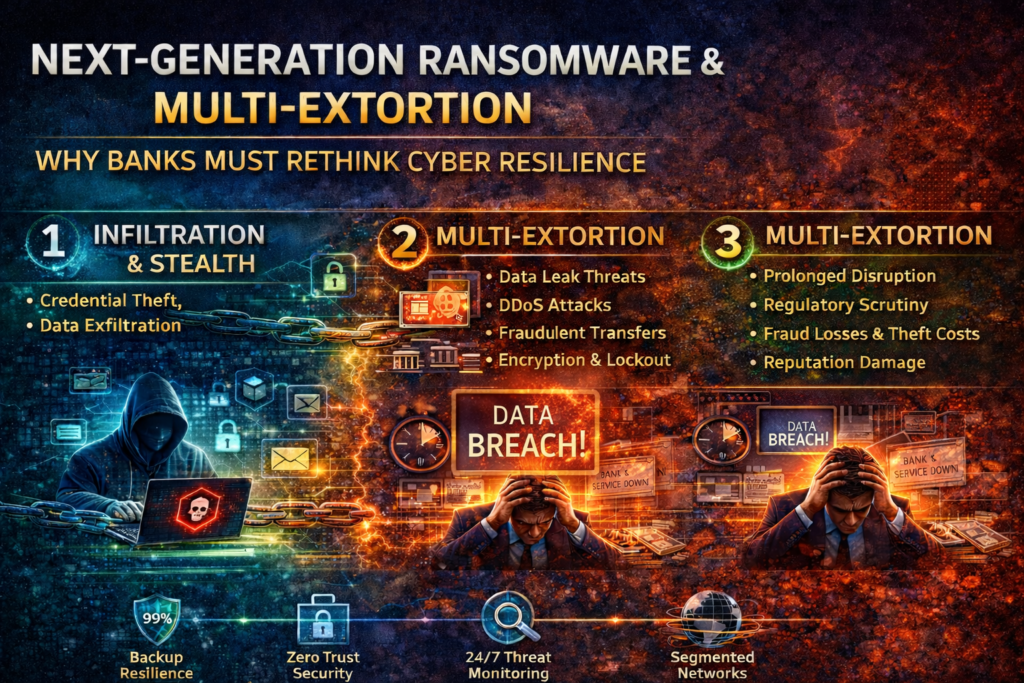
Encryption is no longer the primary weapon. It is the final step in a broader multi-extortion strategy that combines data theft, service disruption, regulatory exposure, and executive pressure. This shift fundamentally changes how banks must think about prevention and response.
3.0 Inside the Multi-Extortion Playbook Targeting Banks
Multi-extortion has become the default operating model. Sensitive data-KYC records, transaction histories, internal emails, and legal documents- is exfiltrated first to create leverage. Encryption follows only after attackers are confident that
business impact will be severe.
To accelerate decision-making, attackers layer additional pressure. Distributed denial-of-service attacks and deliberate system outages distract response teams and compress timelines. In parallel, compromised credentials are often used to initiate unauthorized transfers or account takeovers, turning ransomware incidents into blended cyber-fraud crises.
4.0 Why Banks Remain Prime Targets
Banks combine high-value data, low tolerance for downtime, and intense regulatory scrutiny-an ideal extortion profile. Legacy infrastructure frequently operates alongside cloud-native platforms and open APIs, creating visibility gaps and inconsistent controls.
Third-party dependencies amplify exposure. Vendors, fintech partners, and service providers often become the initial point of compromise, allowing attackers to pivot into core banking systems through trusted integrations. Flat networks and untested incident response playbooks further increase blast radius once attackers gain access.

5.0 The True Business Impact Goes Beyond the Ransom
Focusing on ransom payments alone understates the real cost of these attacks. Ransomware incidents routinely trigger prolonged outages across core banking, payments, and digital channels. Breached data increases long-term fraud exposure and invites sustained regulatory scrutiny.
Recovery costs escalate quickly. Forensics, system rebuilds, customer remediation, legal action, and compliance efforts often exceed the original ransom demand by multiples. In many cases, reputational damage and trust erosion outlast the technical recovery.
6.0 Defenses That Materially Reduce Ransomware Impact
Resilience depends less on individual tools and more on architectural discipline. Banks that reduce ransomware impact prioritize identity-centric security and Zero Trust principles, enforcing least privilege and continuous verification to limit lateral movement.
Backup and recovery resilience is equally critical. Offline and immutable backups remove encryption leverage and accelerate restoration. Continuous monitoring through 24×7 security operations reduces attacker dwell time and improves containment before damage escalates.
7.0 Leadership Actions Banks Cannot Defer
Ransomware is not an IT issue-it is an enterprise risk. Effective defense requires executive ownership and board-level visibility into cyber risk decisions. Clear authority, rehearsed response playbooks, and tested governance structures reduce
chaos during incidents.
Alignment with established frameworks such as NIST, ISO 27001, and Zero Trust principles improves consistency, auditability,
and long-term resilience.
8.0 The Road Ahead for Banks
Next-generation ransomware will continue to evolve, combining technical intrusion with psychological and regulatory pressure. Preparedness-not prediction-defines resilience.
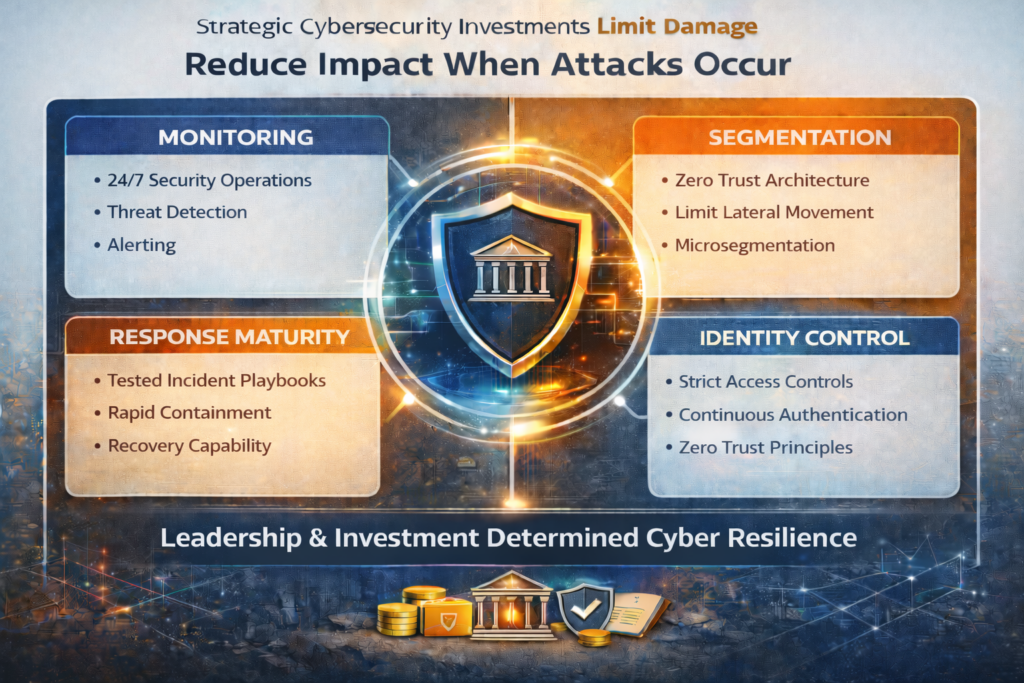
Banks that invest in monitoring, segmentation, identity control, and response maturity limit damage when attacks occur. Leadership commitment and sustained strategic investment will ultimately determine cybersecurity outcomes in an
increasingly hostile threat landscape.