1.0 Introduction
Digital banking has entered a new risk phase. Real-time fraud powered by deepfakes and synthetic identities is no longer an edge case – it is rapidly becoming a core threat to trust, liquidity, and customer confidence. In a world of instant payments
and frictionless onboarding, fraud now succeeds at the point of authorization, not after transactions are completed.
For banks, this marks a structural shift. Traditional post-transaction controls are increasingly irrelevant when funds move irreversibly in seconds.
2.0 Why Real-Time Fraud Is Accelerating in Digital Banking
Real-time payment rails have eliminated recovery windows. Once a transaction clears, monitoring and investigation become academic exercise rather than loss-prevention tools.
At the same time, growth-driven digital onboarding has expanded the attack surface. Automated KYC and low-friction account creation optimize scale but struggle to distinguish legitimate intent from synthetic identity construction. Fraudsters
exploit these gaps to enter ecosystems quietly and mature accounts over time.
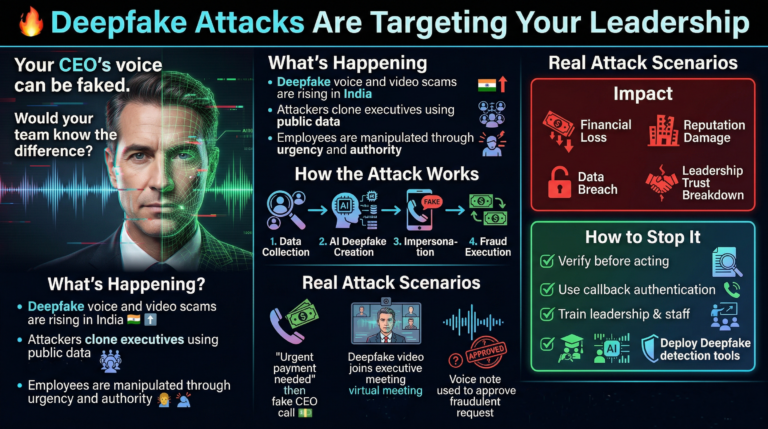
AI-driven social engineering compounds the challenge. Deepfake voice and video now convincingly impersonate customers, executives, and support staff. Authorization decisions collapse under perceived legitimacy, urgency, and familiarity- exactly the conditions real-time banking creates.
3.0 Deepfakes: When Authentication Itself Is Manipulated
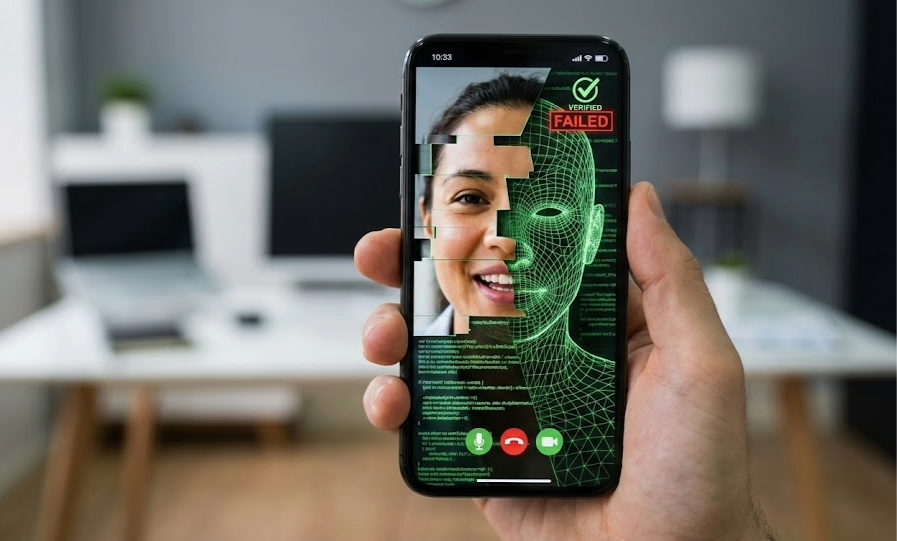
Deepfake technology has moved beyond novelty into operational fraud tooling. Synthetic media reproduces tone, cadence, facial micro-expressions, and conversational behaviour with alarming accuracy.
Call centres remain particularly exposed. Voice-based authentication systems struggle against AI-generated speech, allowing attackers to trigger credential resets, raise transaction limits, or authorize payments. Video verification processes face similar pressure when liveness detection and anti-spoofing controls lag attacker capabilities. Critically, these attacks succeed because verification tools operate in silos. Voice, video, and transaction risk signals rarely converge in real time, leaving authorization decisions blind to coordinated manipulation.
4.0 Synthetic Identity Fraud at Digital Scale
Synthetic identity fraud bypasses traditional KYC by design. Hybrid identities combine real data points with fabricated attributes, passing consistency checks while masking fraudulent intent.
Once onboard, these accounts behave normally. Low activity and delayed escalation build artificial trust over time. Dormancy reduces scrutiny. Thresholds relax. When transactions finally spike, the window for prevention has already closed.
Weak linkage across devices, phone numbers, and mule networks allows synthetic identities to replicate at scale, turning isolated gaps into systemic exposure.
5.0 Why Real-Time Payments Magnify Loss
Instant settlement fundamentally changes fraud economics. Chargebacks disappear. Transaction velocity overwhelms legacy scoring models. Funds fragment across multiple real-time transfers, obscuring attribution and accelerating cash-out through mule networks.
Operational response cannot keep pace. Manual reviews, callbacks, and investigations occur after losses materialize, not before.
6.0 What Effective Detection Must Look Like Now
Fraud prevention in real-time banking must shift from static checks to continuous intelligence.
Behavioural signals-session dynamics, device posture, interaction patterns-surface intent earlier than identity attributes alone. Continuous risk assessment across login, navigation, and transaction stages becomes mandatory.

Most importantly, cross-channel visibility must converge in real time. Voice behaviour, authentication events, transaction metadata, and device intelligence need a unified risk view. Adaptive friction can then be applied selectively, disrupting
fraud without degrading legitimate customer experience. Automated containment-real-time holds, account freezing, and transaction interdiction-becomes the final line of defense before funds leave the ecosystem.
7.0 Defending Trust at Transaction Speed
Security in digital banking must now operate at the same speed as payments. Layered identity assurance combining biometrics,
liveness detection, behavioural analytics, and device intelligence is no longer optional.
Equally critical is ecosystem coordination. Banks, payment platforms, and telecom providers must exchange intelligence rapidly to disrupt mule networks and synthetic identity reuse.
Institutions that invest in automation, rehearsed response playbooks, and proactive intelligence preserve not just capital,
but customer confidence.
8.0 Conclusion: The New Economics of Trust
Real-time fraud driven by deepfakes and synthetic identities represents a permanent shift in digital banking risk. Institutions that rely on post-transaction review will continue to absorb irreversible losses.
Banks that embed real-time intelligence, behavioural analytics, and automated containment across every transaction layer will define the future of trust, resilience, and competitive survival in digital banking.