1.0 Introduction
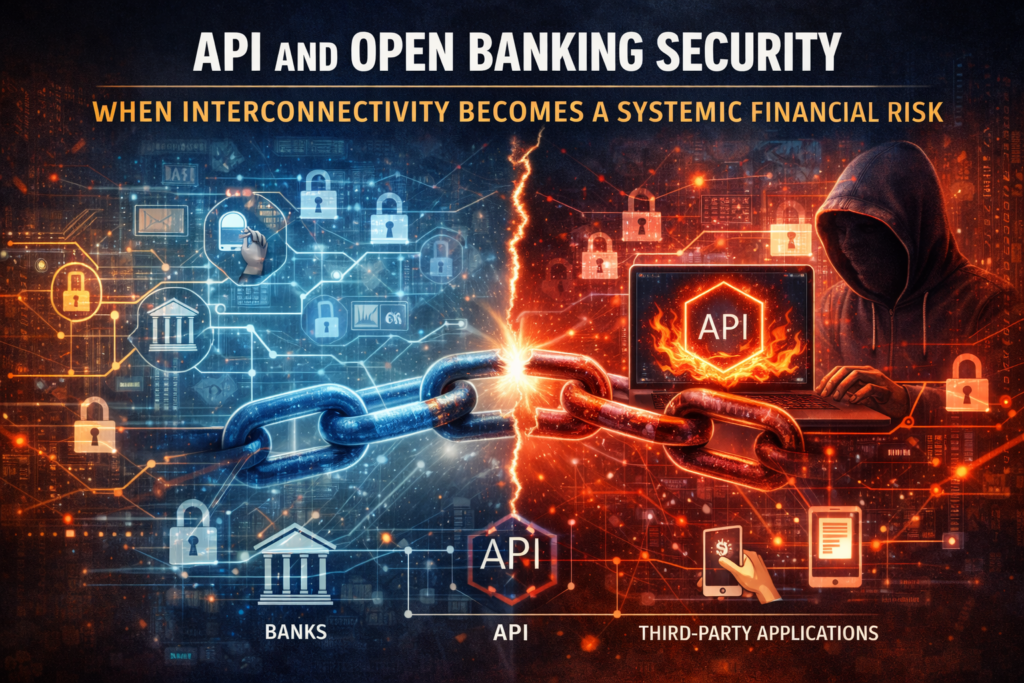
API-driven platforms now form the digital backbone of the global financial system. Payment processing, account aggregation, embedded finance, digital lending, and open-banking ecosystems all depend on continuous data exchange between banks,
fintechs, and third-party providers. This architecture has accelerated innovation-but it has also expanded attack surfaces at a speed most institutions are struggling to secure.
In today’s environment, attackers no longer need to breach core banking systems directly. APIs have become the preferred entry point. Weak authorization, excessive trust in third parties, and limited API visibility allow threat actors to access sensitive financial data and perform fraudulent transactions on a scale.
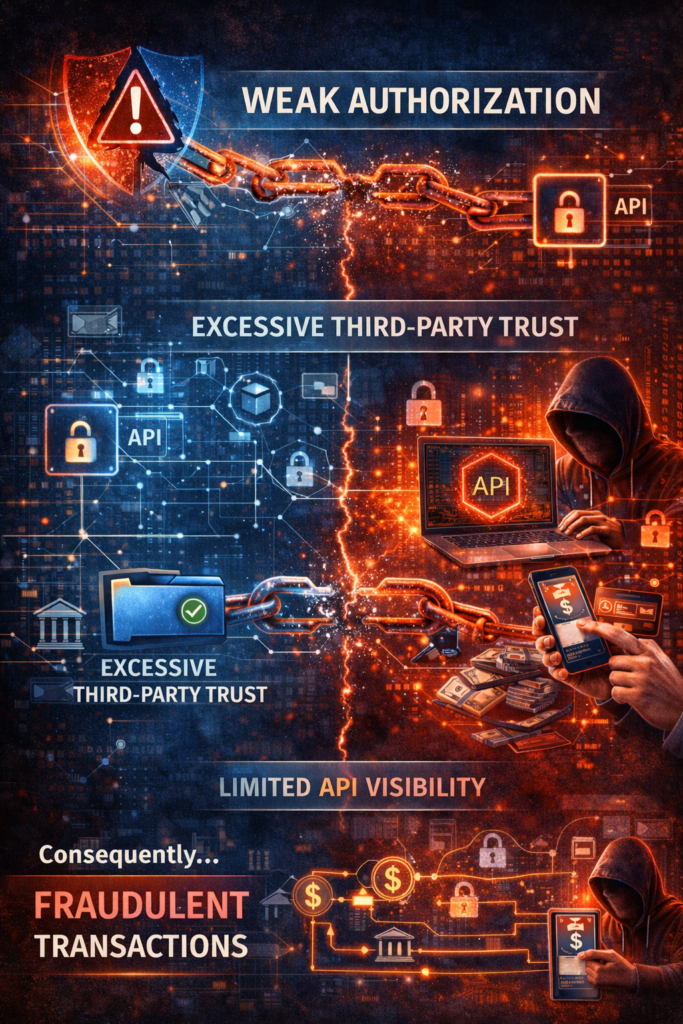
As financial systems grow more interconnected, security failures propagate across institutions rather than remaining isolated events.
2.0 Why APIs and Open Banking Redefine Cyber Risk
APIs externalize access to critical banking services. Even minor flaws in authorization logic can expose millions of records or enable fraudulent fund movement. Unlike traditional interfaces, APIs operate continuously, making them ideal targets for automation-driven abuse.
High-availability endpoints allow attackers to operate at machine speed. Credential stuffing, object enumeration, and transaction manipulation can occur silently and repeatedly. At the same time, trust extends beyond institutional boundaries. Third-party applications retain access to sensitive systems while operating outside direct operational control, introducing systemic risk into regulated environments.
3.0 The Most Exploited API Security Weaknesses
Across international financial systems, certain API weaknesses consistently drive breaches. Broken object-level authorization allows attackers to manipulate identifiers and access other customers’ data. Token misuse and weak authentication enable silent abuse using valid credentials. Excessive data exposure amplifies breach impact by returning more information than necessary.
Third-party compromise further compounds risk. When partners are breached, attackers inherit trusted access paths directly into regulated financial systems.
4.0 How API Attacks Materialize in Practice
API attacks rarely trigger traditional security alarms. Authenticated requests blend into legitimate traffic, enabling silent data harvesting over extended periods. Compromised tokens are essential to automate financial fraud, including rapid transfers and beneficiary changes. Without dedicated API-level monitoring, detection delays and dwell time increases, magnifying loss and regulatory exposure.
5.0 What Effective API Security Must Look Like
Reducing API and open-banking risk requires security to be embedded into architecture rather than bolted on later.
Centralized API gateways must enforce consistent authentication, authorization, input validation, and logging. Strong identity and consent enforcement-short-lived tokens, strict scopes, and revocable access-limits abuse even when credentials
are compromised. Runtime monitoring and anomaly detection must correlate API behaviour with fraud and security operations in real time.
Least-privilege third-party access is essential. Limiting what partners can see and do reduces blast radius when external environments are compromised.
6.0 Leadership Imperatives in an Interconnected Ecosystem
API risk is no longer a technical issue-it is financial stability and trust . Executive leadership and boards must treat API security as a core component of digital strategy and ecosystem governance.
Clear accountability across products, security, risk, and compliance teams ensure that innovation does not outpace control. Institutions that embed security into API design, enforce continuous monitoring, and govern third-party access can scale safely. Those that delay risk turning open ecosystems into high-impact attack surfaces.
7.0 Conclusion: Securing the Future of Open Finance
API and open-banking security risks now shape the resilience of international financial systems. Trust in digital finance depends on the ability to protect interconnected platforms at scale.
Organizations that design secure APIs, monitor behaviour continuously, and enforce accountability across ecosystems will
continue to innovate with confidence. Those that fail to act risk systemic exposure that extends far beyond individual
institutions.